

“Commercial” is one word covering four different markets, and in Calgary right now those four markets are not behaving remotely alike. Industrial space is tight. Retail is tight. Office is the loosest it has been in a generation. Purpose-built rental is soft enough that landlords are cutting asking rents. Any advice that treats commercial property as a single category is going to be wrong for three of the four.
I work across all of it: operating businesses, industrial and warehouse space, retail and office, and revenue property bought for yield. Below is what each of those markets actually looks like as of the most recent quarterly data, and what it means depending on whether you are buying or selling.
Four Markets, Four Very Different Conditions
Calgary’s industrial vacancy rate fell to 4.7% in the second quarter of 2026. That is a tight market. Well-located bays with decent loading go quickly, and buyers who need to see six properties before deciding routinely lose the first three.
Retail sat at 4.7% at the end of 2025 — also tight, and tighter still for the good stuff. Anchored plaza space and high-traffic corners in established trade areas rarely reach open marketing.
Office is the outlier at 21.3% overall, and downtown is worse: 27.2% as of the third quarter of 2025, with net absorption running more than a million square feet negative year to date. Roughly one downtown office floor in four is empty.
Purpose-built rental vacancy was 5.0% in 2025, at the top of the 3.0% to 5.5% band CMHC treats as balanced, and asking rents have been falling. For investors that is the single most important number on this page, and I will come back to why.
Businesses for Sale
Buying an operating business is the part of commercial work most people understand least, and it is where I spend a lot of my time. The listings I carry are typically restaurants and food service, salons and personal services, franchises, and light industrial operations — the sort of businesses that change hands quietly rather than through public marketing.
The first thing worth knowing is that the real estate is often not the asset. In most of these deals you are buying goodwill, equipment, inventory, staff, and — critically — a lease. A restaurant with eight years left on a below-market lease in a busy strip is worth substantially more than the same restaurant with two years left and a renewal at market. I read the lease before I get excited about the financials, and so should you.
The second is the structure. An asset sale and a share sale carry very different tax and liability consequences, and the seller and buyer usually want opposite ones. That is a conversation for your accountant and lawyer, but it needs to happen before an offer, not after. The third is landlord consent: almost every commercial lease requires the landlord to approve an assignment, and a landlord who does not like your covenant can end a deal that both parties have already agreed to.
You can see what is currently available on the businesses for sale page. Much of what I handle never appears there, so if you are looking for something specific it is worth asking.
Industrial and Warehouse
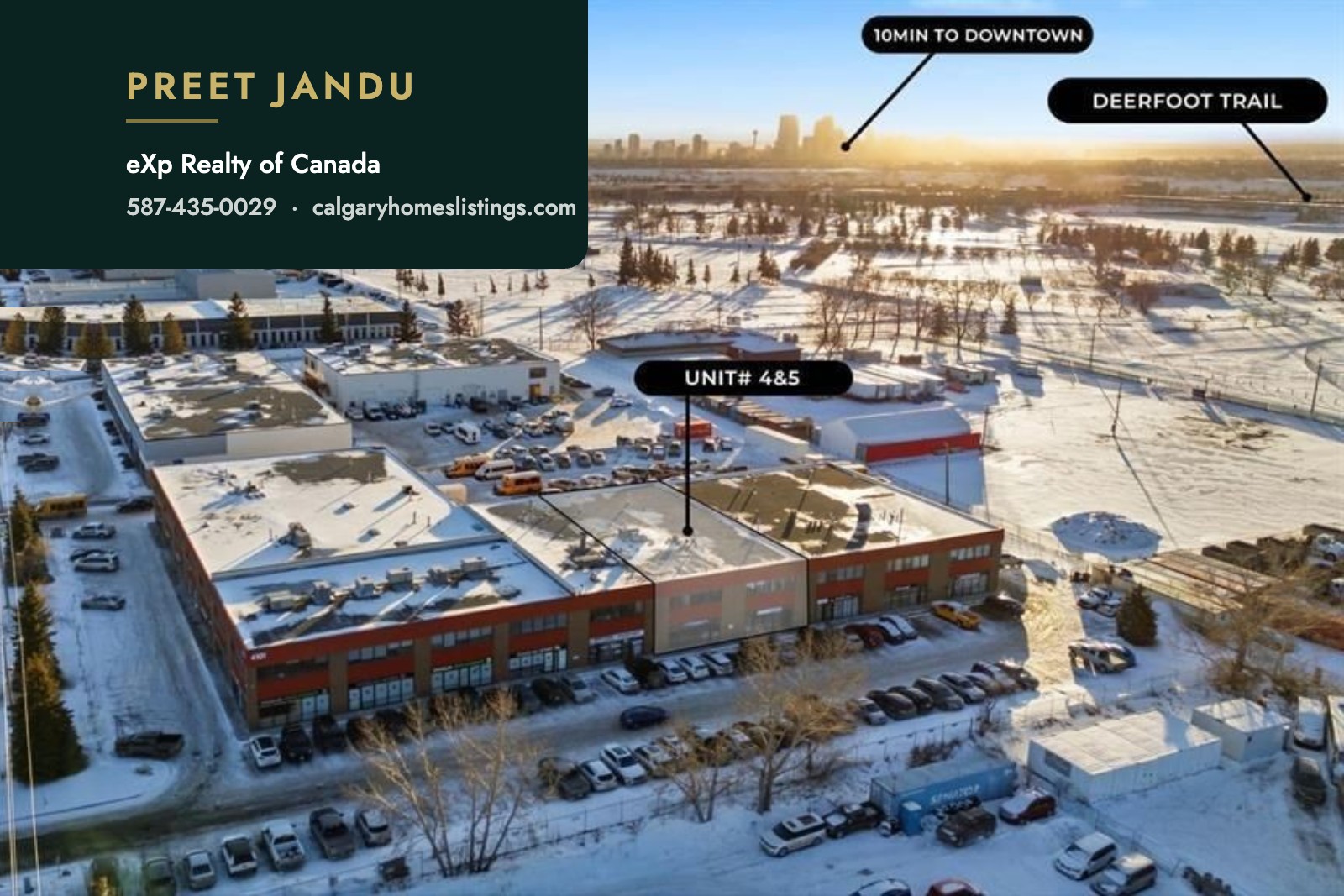
At 4.7% vacancy this is a seller’s and landlord’s market, and buyers need to arrive prepared. The details that decide whether a building works for you are unglamorous and expensive to get wrong: clear ceiling height, whether loading is drive-in or dock-level, three-phase power and available amperage, floor drains and make-up air if you are doing anything mechanical, yard space for trucks to actually turn, and the zoning that governs what you are permitted to do inside.
Calgary’s industrial stock splits broadly between condominium bays — cheaper entry, shared common costs, condo board rules about what you can store and how you can operate — and freestanding buildings with their own yard, which cost considerably more and give you control. Owner-operators buying their first space almost always start with a bay. Whether that is right depends on how much yard you need and how loud, dirty or fume-producing your operation is.
Retail and Office
Retail at 4.7% behaves like industrial: the good units move fast and much of the market is relationship-driven. The variables that matter are trade area demographics, parking ratio, co-tenancy, signage rights, and whether the lease is gross or net — a “cheap” net rent with high operating costs and property tax recovery is frequently more expensive than a higher gross rate.
Office is a genuinely different proposition, and I want to be straightforward about it. A 21.3% vacancy rate means tenants and buyers hold the leverage, and landlords are competing with generous inducements. That is an opportunity if you need space. It is a warning if you are buying an office building as an investment, because you are buying into an oversupplied market and your exit depends on that changing.
What makes office more interesting than the raw number suggests is that supply is being permanently removed. The City of Calgary’s Downtown Office Conversion Program has approved 21 projects that take 2.68 million square feet of office space out of the market and turn it into 2,667 homes plus a hotel and a hostel, funded at $75 per square foot. Applications closed on 27 July 2026. Space converted to housing does not come back when the market recovers. That is a real structural change, not a talking point — though it will take years to show up in the vacancy figure.
Investment and Multi-Family
Here is where I see the most avoidable mistakes. Apartment vacancy at 5.0% is at the loose end of balanced, and CMHC reports asking rents declining in Calgary. Plenty of pro formas I am shown still underwrite on the rents of two years ago, when the market was much tighter and rents were climbing quickly. If your model assumes you will achieve last year’s rent on turnover, stress-test it against today’s, because that is what you will actually get.
The other habit worth breaking is buying on cap rate alone. A 6% cap looks fine until you compare it to your financing cost, your vacancy allowance, and a realistic capital reserve for a building that will need a roof or boilers inside your hold period. The number that matters is what lands in your account after debt service and reserves, not the number on the listing sheet.
How Commercial Actually Differs From Buying a House
If your only experience is residential, four things will surprise you.
Financing is harder. Expect a larger down payment, a shorter amortization, and a lender who underwrites the property’s income and your covenant rather than just your personal credit. Approval takes longer and comes with more conditions.
Due diligence is deeper. Environmental assessment matters — a Phase I, and a Phase II if the first one flags anything, particularly on industrial sites with any history of fuel storage or auto work. Add building condition, zoning and permitted use verification, lease and estoppel review, and, on a business purchase, the financials.
GST applies. Unlike a resale house, commercial real estate transactions in Canada attract GST. Registrants can often self-assess rather than paying it at closing, which is a meaningful cash-flow difference — confirm the treatment with your accountant before you write an offer, because it changes the money you need on possession day.
Less of the market is public. A large share of commercial and business transactions never gets publicly listed. Sellers of operating businesses in particular do not want staff, customers or competitors knowing. That is why relationships and discretion do more work here than marketing does.
Frequently Asked Questions
Do I need a different real estate agent for commercial property?
Not a different licence in Alberta, but genuinely different experience. Commercial deals turn on leases, zoning, environmental risk and financing structures that simply do not arise in residential transactions. Ask any agent what they have actually closed in the asset class you are looking at.
Is GST charged on commercial real estate in Calgary?
Yes. Commercial property transactions attract GST, unlike resale residential. GST-registered buyers can frequently self-assess instead of paying at closing, which changes what you need in cash on possession. Confirm the treatment with your accountant early — this is one of the biggest differences from a house purchase.
How much down payment do I need for commercial property?
Considerably more than residential, and it varies by asset type, tenant quality and your covenant. Lenders look at the income the property produces and how secure it is, so a building with a strong long-term tenant is financed differently from a vacant one you intend to occupy. Speak to a commercial lender before you shop, not after.
Is now a good time to buy office space in Calgary?
For occupying, it is the strongest tenant and buyer market in years at 21.3% vacancy. As an investment it deserves more caution — you are buying into oversupply, and the conversion program removing 2.68 million square feet will take time to change that. The answer genuinely depends on whether you plan to use the space or rent it out.
Can I buy a business without buying the building?
Yes, and most business purchases work exactly that way. You acquire the operation and take an assignment of the existing lease, which is why the lease terms and the landlord’s willingness to consent matter so much. Some deals include the real estate; most do not.
Talk It Through
Whether you are buying your first industrial bay, selling a business you have run for twenty years, or working out whether a revenue property still makes sense at today’s rents, the useful conversation happens before you are committed to anything. I will tell you when a deal does not work — that is most of the value.
Preet Jandu, eXp Realty — get in touch or call 587-435-0029. See current businesses for sale, or read about investment property and residential real estate.
Market figures on this page: industrial, office and retail vacancy from Cushman & Wakefield’s Calgary MarketBeat (Q2 2026 industrial and office, Q4 2025 retail); downtown office detail from Avison Young (Q3 2025); conversion program figures from the City of Calgary; rental vacancy from CMHC’s 2026 mid-year update. Updated August 2026.
Restaurants for sale
If you are looking specifically at food service, see my guide to restaurants for sale in Calgary — lease assignment, licensing and what the numbers need to prove.
Current business & commercial listings
Listed publicly right now — many business sales are confidential, so ask about what is not listed.




Related: businesses for sale in Calgary, the business valuation calculator, and how US investors buy Calgary commercial property.