Menu
- Buy
- Buying with Preet
- MLS® Search
- Residential
- Moving to Calgary
- Closing Cost Calculator
- Newcomer Buying Guide
- Alberta Tax Savings Calculator
- Guides & Calculators
- Moving from Toronto
- Moving from Vancouver
- Title Insurance in Alberta
- Income Needed to Buy
- New-Build Homes in Calgary
- Real Estate Lawyers in Calgary
- Sell
- Communities
- Luxury
- Invest
- Businesses for Sale
- About
- Contact
Banff Homes for Sale
Buying real estate in Banff is unlike buying anywhere else in Canada — because Banff is the only incorporated town inside a national park. That setting delivers a home surrounded by protected wilderness, but it also comes with rules most buyers have never encountered: eligibility requirements to live here, leasehold land instead of freehold, and one of the most supply-constrained markets in the country. Understanding those rules is step one, and this page walks you through them.
Below you’ll find active MLS® listings in Banff, updated in real time.
The Eligible Residency Requirement
Because Banff sits inside Banff National Park, Parks Canada’s need to reside rules apply: to live in Banff you generally must work in the park, operate a business in the park, be a retiree who worked in the park immediately before retiring, or be an immediate family member of an eligible resident. Read that carefully, because it governs living in Banff, not owning there. Parks Canada is explicit that non-residents may hold a Banff leasehold without living in the park — but holding one does not make you eligible to reside, and anyone actually occupying the home must meet the residency test in their own right. So ownership as a non-resident is possible; using it as a weekend home generally is not. Confirming who will occupy the property, and on what basis, is the essential first step, and it is one I help buyers through regularly. Rules can change, so verify your situation with Parks Canada before you commit.
Leasehold, Not Freehold
All land in Banff is federal Crown land. Property owners hold long-term renewable leases from Parks Canada rather than fee-simple title. In practice, homes are bought, sold and mortgaged much like anywhere else — lenders and lawyers in the Bow Valley handle leasehold routinely — but it’s a structural difference your financing and legal advice need to account for.
Living in Banff
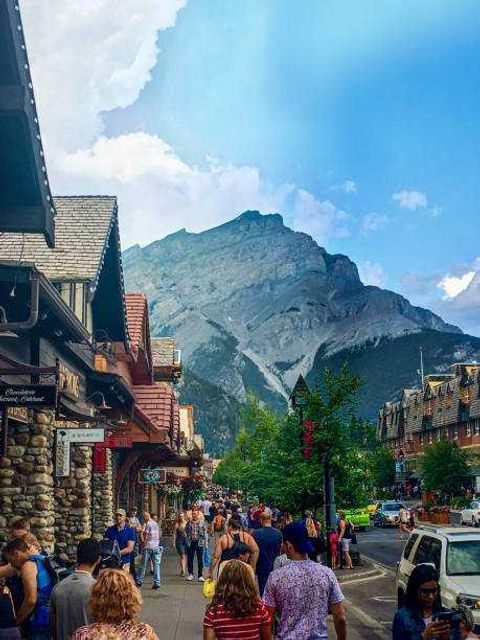
The setting — A vibrant international town of roughly 8,000–9,000 residents at the foot of Cascade Mountain, with Sulphur Mountain, the Bow River and three ski areas as the backyard.
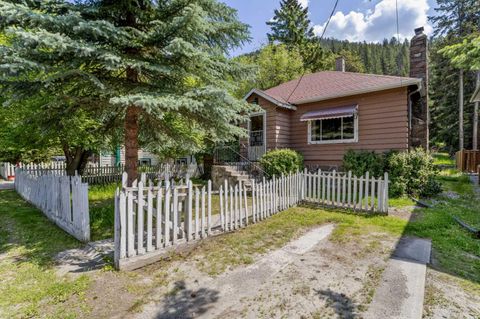
The housing mix — Banff’s fixed townsite boundary means a compact market: condos and apartments, townhomes, duplexes and a limited stock of single-family homes, many with suites that house the town’s workforce.
The lifestyle — Walkable everything, a genuine community beneath the tourism, and Calgary about 90 minutes east when the city calls.
The Banff Market Right Now
Inventory in Banff is permanently scarce — typically a short list of active listings rather than a deep market. When this page was written in mid-2026, listings ranged from around $229,000 for entry-level condos to over $4 million at the top end; the listings below update daily from the MLS® System. Scarcity plus a captive buyer pool of eligible residents keeps values firm, and well-priced properties often see quick interest when they do appear.
Buying or Selling in Banff
Buyers: Eligibility first, financing second, property third — the Banff order of operations. I’ll help you confirm your residency basis, connect leasehold-experienced lenders, and move quickly when the right listing appears in this thin market.
Sellers: Your buyer pool is specialised but motivated. Positioning your property correctly for eligible residents — and for the suite-income reality of the Banff market — is how you maximize value. Free, no-obligation evaluation available.
Call or text Preet Jandu, eXp Realty: 587-435-0029 — or use the contact form to start the conversation.
Banff FAQ
Can anyone buy a home in Banff?
Purchasing has nuances, but the practical constraint is occupancy: Parks Canada’s eligible-residency rules mean you generally need to work or operate a business in the park to live in Banff. If you don’t qualify, nearby Canmore is the usual alternative — but do not assume it is unrestricted. Banff and Canmore are restricted in opposite ways, and it is worth knowing which one applies to you. Banff’s Parks Canada rules govern who may live in the park, not who may hold a lease. Canmore has no residency test — but it is a census agglomeration, so purchases there currently fall under the federal Prohibition on the Purchase of Residential Property by Non-Canadians, in force until 1 January 2027, with exemptions for permanent residents, certain temporary residents and others. Neither restriction affects Canadian citizens or permanent residents. Verify your own eligibility before committing to either.
Do you own the land in Banff?
No — all Banff property sits on leased federal Crown land under long-term renewable leases, bought and sold much like ordinary homes but with leasehold-specific legal and financing considerations.
What do homes cost in Banff?
Current listings span roughly $229,000 for condos to over $4 million for premium properties. Scarcity keeps the market firm year-round.
How far is Banff from Calgary?
About 90 minutes west on the Trans-Canada Highway, and 20 minutes past Canmore.
How a Banff Lease Actually Works
Because all land in the town sits on federal Crown land, what changes hands is a long-term lease from Parks Canada rather than fee-simple title. In practice the transaction feels much like any other — you make an offer, you finance it, a lawyer closes it, and you can sell it on — but there are differences worth understanding before you start.
Leases run for long terms and are renewable, which is why lenders and the market treat them much like ownership. What the lease document says still matters: permitted use, any restrictions on alteration or subdivision, and the conditions attached to transfer. Parks Canada’s consent is part of the process, and your lawyer will deal with it as a matter of routine rather than an obstacle.
Financing a Leasehold
Most major lenders will finance Banff leasehold property, but not all will, and terms can differ from a conventional purchase — some will want the remaining lease term to comfortably exceed the amortisation. This is not a reason to worry; it is a reason to speak to a lender who has done Banff before rather than assuming your usual branch will process it like a Calgary bungalow. Sorting financing early avoids a condition period spent educating an underwriter.
What Comes Up for Sale
Inventory is genuinely scarce — the town cannot expand its boundary, so the housing stock is close to fixed. What trades is mostly condominium apartments and townhomes, a limited number of single-family homes, and occasionally a commercial or mixed-use property. Anything family-sized attracts attention quickly, because eligible residents competing for it have nowhere else in the park to go.
On condominiums, read the documents with the same care you would anywhere else: reserve fund study, minutes, any special assessment history, and the bylaws. Mountain buildings carry weather and snow-load maintenance that a Calgary building does not.
Ongoing Costs
Budget for the lease payment to Parks Canada, Town of Banff property taxes and utilities, condominium fees where applicable, and insurance. Insurance in a mountain town is worth pricing before you commit rather than after — it is not always comparable to a city quote.
Before You Start Looking
The sequence matters more here than anywhere else I work. Confirm eligibility first, arrange financing with a lender who understands leasehold second, and view property third. Doing it in the other order is how people fall for a place they cannot occupy, and that is a genuinely disappointing conversation to have.
Rules and interpretations can change. Verify your own position with Parks Canada, and get legal advice on the lease before you sign anything.
Explore Nearby Communities
No park restrictions next door: explore Canmore, plus Cochrane, Springbank and Calgary.